
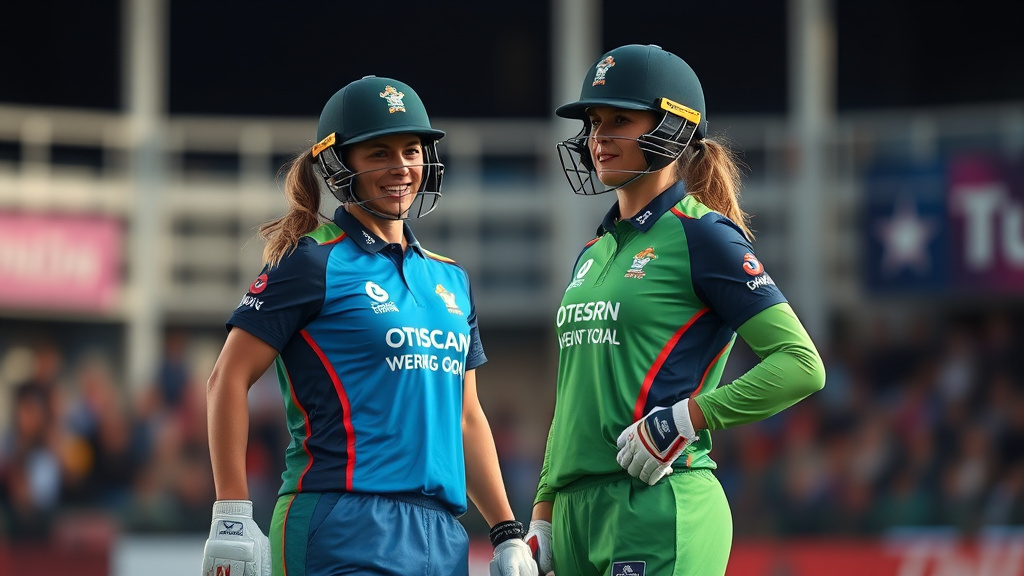
Women’s cricket is undergoing an unprecedented surge in sponsorship engagement as major sponsors and broadcasters acknowledge the sport’s dynamic development and international popularity. The newest women’s cricket competition has shattered previous records, obtaining major sponsorship agreements and record-breaking media distribution that matches established sporting leagues. This article analyzes how deliberate financial commitments, growing audience figures, and increased media attention are reshaping women’s cricket into a major athletic industry, while examining the implications for talent progression, long-term viability, and the prospects for women’s athletics worldwide.
Historic Sponsorship Achievements
The women’s cricket league has attained unprecedented financial success, securing sponsorship deals that surpass all previous records for women’s sports. Large international companies and regional brands have pledged significant funding, acknowledging the league’s enormous audience reach and demographic appeal. These sponsorship agreements represent a fundamental shift in how corporate entities value women’s athletic competitions, showing confidence in the league’s sustained growth and market growth trajectory.
Financial analysts forecast that current sponsorship revenues will keep growing as the league expands its international footprint. High-value deals with digital innovators, banking sector, and consumer brands have secured landmark deals worth hundreds of millions of dollars. This influx of capital directly funds athlete compensation, infrastructure development, and brand-building efforts, establishing a long-term foundation that attracts top talent globally and raises competitive excellence significantly.
Global TV Growth and Content Rights
The women’s cricket league has transformed media coverage through pioneering television contracts spanning multiple continents. Broadcasting rights have been locked in with prominent channels across Asia, Europe, North America, and Australia, ensuring unprecedented global visibility. These extensive broadcasting agreements represent a significant shift in how women’s sports are valued by traditional broadcasters. The extended media presence has made it possible for millions of new viewers to access matches live, fundamentally transforming the league’s reach and commercial viability on the worldwide scale.
Broadcasting Partnerships Around the World
Major international broadcasters have invested considerable resources to airing women’s cricket matches, identifying the demographic appeal and revenue prospects. Major broadcasters in Europe and North America have allocated prime-time slots for tournament games, elevating the sport’s standing among broader audiences. These collaborations include full-service packages including direct coverage, edited summaries, and exclusive behind-the-scenes content. The deliberate scheduling of matches at prime time has substantially boosted viewer participation and demonstrated robust market appeal for broadcasters seeking varied sports content.
Asian broadcasters have emerged as particularly aggressive investors in women’s cricket broadcasting rights, leveraging the sport’s deep cultural roots and devoted audiences across India, Pakistan, and Southeast Asia. Local broadcasters have negotiated exclusive distribution deals, developing localized commentary and content tailored to regional audiences. These partnerships have generated significant revenue while guaranteeing culturally appropriate programming that resonates with local viewers. The intense competitive landscape among Asian networks has pushed media rights valuations to record levels, establishing women’s cricket as a premium sporting property.
Digital Platforms and Audience Expansion
Digital streaming services have emerged as essential distribution channels, enabling immediate viewing to sporting events and in-depth cricket content. Collaborations with top-tier streaming providers have expanded audience reach, allowing fans around the world to watch matches independent of their location or broadcast schedules. Engagement tools, multiple camera angles, and tailored content preferences have elevated the digital experience, engaging younger audiences and digitally-native viewers. The integration of social media content and real-time fan engagement tools has built vibrant online communities that extend beyond traditional broadcast windows.
Viewer data show exponential growth across online channels, with streaming services reporting record-breaking concurrent viewer numbers during prominent sporting events. Device portability has become notably important, enabling fans to watch matches on smartphones and tablets during travel and downtime. These digital channels have produced actionable audience insights regarding audience preferences, consumption habits, and demographic insights that guide upcoming programming decisions. The integration of broadcast and online video has established a unified content distribution network that maximizes audience reach and engagement across all consumer segments.
Impact on Women’s Cricket Development
The record sponsorship agreements and worldwide broadcast reach are fundamentally transforming women’s cricket career trajectories. Greater funding availability enable cricket boards to allocate funds toward grassroots programs, training facilities, and coaching infrastructure across numerous regions. Young female cricketers now have opportunities for professional development programs previously unavailable, creating more defined advancement pathways. This investment results in enhanced player standards, elevated competition quality, and greater opportunities for aspiring athletes to develop cricket careers and sustainably.
Enhanced media visibility plays a crucial role in inspiring the next generation of women cricketers worldwide. Televised matches showcase elite athletes as figures to emulate, illustrating that women’s cricket delivers legitimate career opportunities and recognition. Higher viewership encourages participation at community level, particularly among young girls who now see relatable representations of achievement in cricket. This exposure creates a positive feedback loop, where more visibility drives participation, which subsequently strengthens the player pipeline and competitive standard of coming leagues.
Sustained sustainability of women’s cricket relies on sustained financial support in talent development and competitive infrastructure. Corporate sponsorship funding enable leagues to provide market-rate pay, drawing leading athletes and keeping veteran athletes. Improved broadcasting deals guarantee consistent media coverage, sustaining fan enthusiasm and participation. These integrated components build an structure where women’s cricket transforms into commercially sound and professionally rewarding, securing the sport’s expansion path and cementing women’s cricket as a lasting presence in worldwide sports and entertainment.
